Set your application up for success
Whether you're just starting to explore an idea or preparing your application, you'll find practical advice, examples and tips to help you put your best foot forward.
A review of the eligibility criteria
Before you start your application, take a moment to check that your organisation and community-based project meet the fund's eligibility criteria. To be considered for funding, applicants must meet all of the requirements below:
-
Be an electrification project (converting something to the use of electricity – such as an EV or converting a diesel boiler to electricity) or create new renewable generation (such as solar panels), or a result in a reduction of greenhouse gas emissions; and
-
Be a project that either wouldn’t have happened or will happen sooner because of this funding; and
-
Be a community-based project with a total value of less than $200,000; and
-
Contribute directly to communities across Aotearoa
The fund is open to any community groups that fit this criteria. Currently schools, councils or government entities are not eligible.
How are applications scored
To help you prepare the strongest application possible, we've outlined the key criteria the assessment panel uses when reviewing funding requests. Understanding these areas will help you focus on the information that matters most and clearly demonstrate the impact your project could deliver.
Each question is weighted differently and contributes to the over-all score of your application:
Area |
Weighting |
Description |
| Social, economic and environmental impact | 40% | Beyond reducing emissions, the positive difference your project will make for your community, including social, economic and environmental outcomes. |
|
Total avoided emissions |
30% | The estimated lifetime carbon reduction delivered by your project, measured in tonnes of CO₂ equivalent. |
| Cost efficiency | 10% | How much emissions reduction each dollar of funding would help achieve. |
| Feasibility | 10% | How realistic the project is based on the information provided, including project design, planning and supporting quotes. |
| Delivery time | 10% | How quickly the project could be delivered, particularly where funding would help bring the project forward. |
What makes a good application:
The strongest applications help the panel understand both the work your organisation does today and the difference your project will make in the future. Specific examples, evidence and measurable outcomes can help bring your application to life and demonstrate the impact of your work.
Don’t assume the panel already understand what work you do in the community or that they will complete a background search. A good application should clearly display this.
Help us understand who you are, what you do, and who you support.
A strong response clearly explains the services, programmes or support your organisation provides, who benefits from your work, and the difference you make in your community. Where possible, include statistics or examples to demonstrate your impact. For example, telling us you support 50 people each day provides a clearer picture than simply saying you support the local community.
Focus on outcomes, not just the project
Help us understand what you're proposing and the difference it will make.
Describe the project you're seeking funding for and explain what it will enable your organisation to achieve. We're interested in more than just what you're purchasing or installing. We want to understand how the project will strengthen your organisation, improve the services you provide, or help you reach and support more people in your community.
The strongest applications clearly demonstrate the outcomes the project will deliver. Where possible, include measurable impacts and specific examples. For example, telling us that a project will allow you to support an additional 50 people each week provides a clearer picture than simply saying it will help you support more people.
Consider:
- Who will benefit from the project?
- How many people will benefit?
- How will they benefit?
- What difference will the project make to your organisation and community?
- What long-term outcomes will the project create?
- How will funding help you increase your impact?
Learn from a successful application: Just Zilch
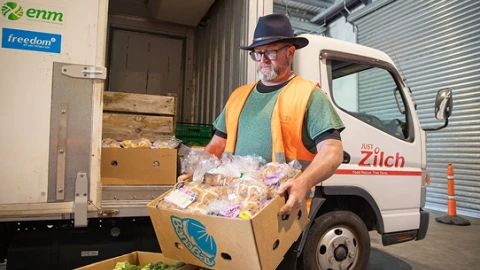
Just Zilch's successful application connected community need with meaningful action. It clearly explained the opportunity, the project's benefits, and the positive difference it would make in people's lives. We encourage you to take a similar approach when sharing your story.
Founded in 2011 in Palmerston North, we are NZ’s longest-running free store. We rescue surplus edible food from supermarkets, producers, and local businesses, food that would otherwise go to landfill, and redistribute it to those in need, no questions asked. Anyone is welcome; people simply bring their own bags and receive trays with a range of food. We distribute an average of 2,000 kg of rescued food a day. Currently, we support around 455 people daily who come to get food from our store. We also support 80+ community groups across Manawatū–Whanganui.
We provide the equivalent of approximately 3,980 meals each day to an average of 455 people, who collect food directly from us to support an estimated 3–4 others in their households. Since March, we have dedicated one shift each Wednesday as a special hour exclusively for seniors (aged 65+), creating a more relaxed environment for those who may feel overwhelmed when collecting food. In the first half of this year alone, we distributed the equivalent of over 151,656 meals to 80 partner groups.
Just Zilch seeks funding to install a 23.6 kWp solar energy system at our Featherston Street site, reducing power costs and supporting long-term sustainability. We use over 59,000 kWh/year to run chillers, fridges, and charge our electric van. The system will save over $6,300 in the first year and $200,000+ over 25 years. Solar aligns with our values: cutting emissions, reducing costs, and ensuring we can keep rescuing and redistributing food to our community.
The impact of this solar system is significant. Estimated first-year savings is over $6,300 and estimated lifetime savings (25 years) is over $202,000, even after accounting for the initial investment. This system is expected to pay for itself in less than 6 years, with decades of ongoing savings to follow. It also provides protection against rising energy costs, ensuring Just Zilch remains financially stable and able to operate sustainably well into the future.
More of our previously funded stories
-
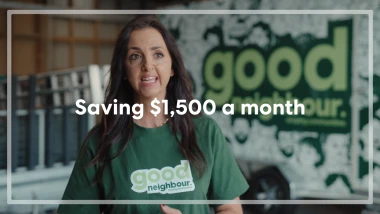
Good Neighbour
Good Neighbour Aotearoa supports communities across the Bay of Plenty through food redistribution, firewood delivery, community meals and whānau programmes such as Rangatahi Ora. The funding is helping install solar and battery storage at their community hub, reducing power costs and strengthening the long-term sustainability of these services.
-
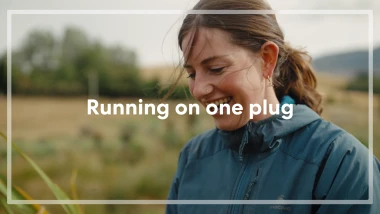
Whakatipu Reforestation Trust
Whakatipu Reforestation Trust propagates and grows native plants through its volunteer-run community nursery, helping local people restore public conservation land. The funding is helping replace an aged solar system with a new one that can properly power the nursery, future-proofing the site as it grows while keeping ongoing costs low.
-
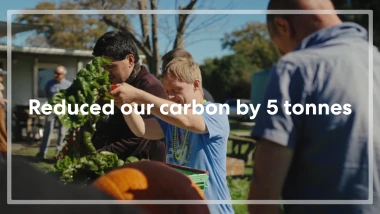
Hōhepa Hawkes Bay
Hōhepa Hawke’s Bay supports people with intellectual disabilities through homes, a school, day services and meaningful work. The funding is helping replace a diesel bore pump with a high-efficiency electric pressure pump for irrigation at its biodynamic Clive dairy farm and community gardens, cutting emissions and improving long-term reliability.
-
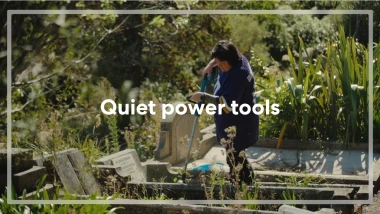
The Graveyard Shift
The Graveyard Shift is a volunteer-led community group that helps restore dignity to graves that would otherwise be lost to overgrowth. The funding is helping replace petrol equipment with battery-powered tools, reducing emissions and noise while making regular maintenance easier for volunteers and modelling sustainable practice within the community.
Frequently asked questions
When is the Community Decarbonisation Fund open for applications?
The Community Decarbonisation Fund will open for 2026 on the 14th of September and close again on the 12th of October.
What should I do if I want to apply for funding for more than one project?
If you'd like funding for multiple projects, please submit a separate application for each project. This helps us assess each project on its own merits and ensures we have all the information needed to review it.
Can I upload supporting documentation?
No. At this stage, supporting documents can't be uploaded or reviewed as part of your application. Please make sure all relevant information is included within the application form itself, as this is the information the assessment panel will use when reviewing submissions.
Can I submit an application on someone else's behalf?
Yes. You can submit an application on behalf of another organisation, provided they are aware of and support the application. Please ensure you include the appropriate contact details for the organisation in the application form.
I'm not sure if I'm eligible. Who can I contact?
We're happy to help. If you're unsure whether your organisation or project is eligible, please get in touch with us at decarbfund@meridianenergy.co.nz and we'll be happy to point you in the right direction.