Did you know that hot water contributes to approximately a third of the typical Kiwi home’s energy demands? And with the shower being the biggest demand of that hot water, it makes sense to think about how our bathroom habits are impacting your pocket. Here’s the good news - with a few changes, the bathroom doesn’t need to cost the earth.
Take Charge - Saving Power In The Bathroom
Why the bathroom uses so much power
Hot water is the main culprit
In two words: hot water. With hot water being such a big chunk (a third of the typical Kiwi home's energy demands through the hot water cylinder), the bathroom is understandably a major contributor. Showers and baths require hot water to be brought up to temperature, and maintaining that heat uses considerable energy.
Inefficiencies add up
Hot water flow through bath taps or shower heads often isn't as efficient as it could be. Throughout the whole journey from your hot water cylinder through to the shower, inefficiencies can creep in if things aren't set up properly or made deliberately more efficient. Small losses at each stage compound into significant wasted energy.
Beyond hot water
The bathroom uses a lot of power through hot water, but there are other factors too, like ventilation and heating. Moisture from the bathroom can also contribute to a damp home environment that requires additional energy to manage. Essentially, the bathroom is such a big power user because of hot water demand, and in many homes, the hot water system isn't as efficient as it could be.
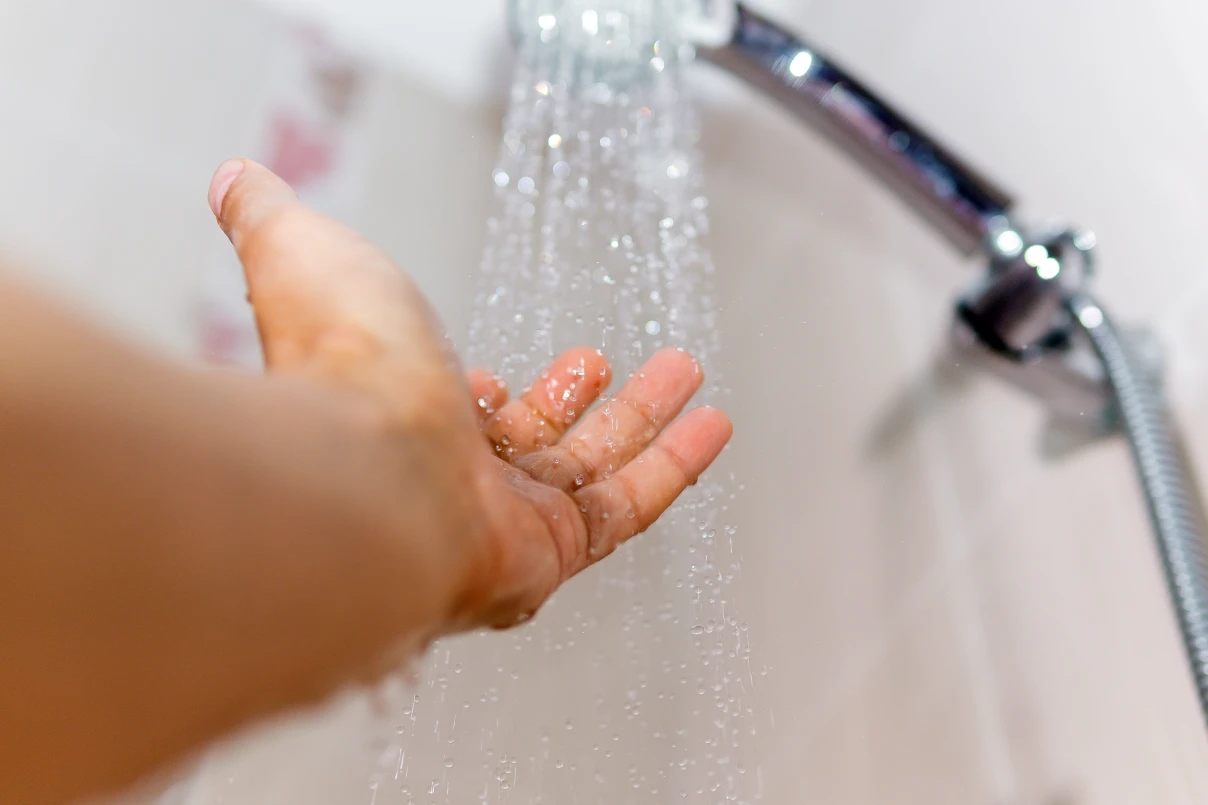
Shower temperature - is your water too hot?
Check your mixer settings
One of the quickest ways to start bringing down the power usage of your shower is checking what temperature is being set at the mixer. That's the control your household uses to adjust water temperature. People often have this set too hot, which means pulling more hot water from the cylinder and using more power to heat it.
Check your cylinder temperature
The hot water cylinder itself also has a maximum temperature setting. You'll want a qualified, reputable plumber to check your hot water cylinder and make sure it's at the right optimum temperature. It should be hot enough to be effective but not so hot that it could be dangerous, especially for young children or elderly family members. Potentially, your shower temperature is too hot on both sides (at the mixer and at the cylinder), so it's worth checking both.
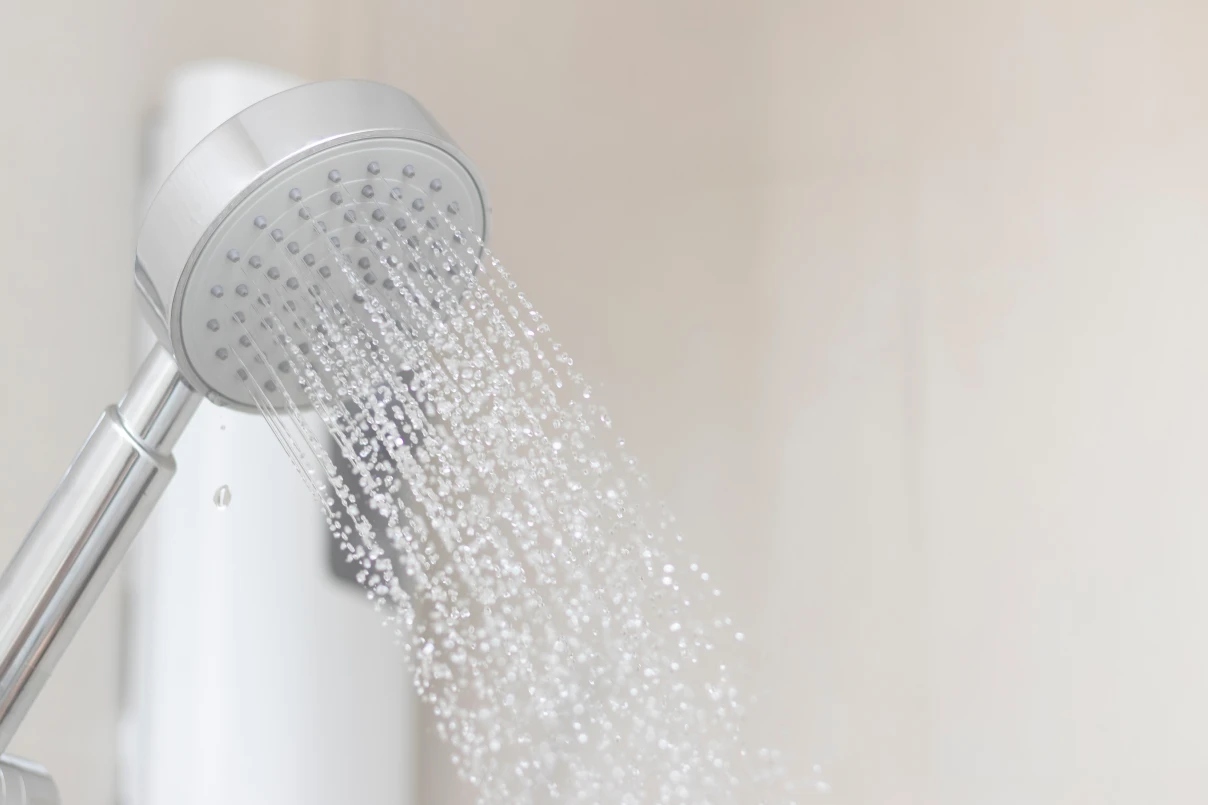
Shower head flow - more water equals more money
Flow rate makes a big difference
More water equals more money, particularly when we're talking about hot water. The volume at which water comes out of your shower head determines how quickly you go through your hot water supply. A shower head might look pretty standard, but an old shower head can put out a much higher flow rate than necessary.
The savings are substantial
For example, a flow rate of 14 litres per minute versus 9 litres per minute can make a significant difference. Switching from a 14 litre per minute shower head to a 9 litre per minute one can cut around 36% off your hot water use for the same length shower. Simply updating your shower head to disperse water at a more efficient level can quickly show up in your power savings. Also check your water pressure (if it's too high, you'll use more hot water and it'll cost you more).
Long showers - we love them but are they needed everyday?
The daily cost adds up
We all love a long shower, but do we really need them every day? A 15-minute shower can cost well over a dollar a day. If you reduce it down to 5 minutes, which is plenty of time most days to get your routine done, you'll start to see that reduction in your power bill over the course of the year.
Winter is the worst culprit
Showers tend to get longer over winter, simply because it's nice to stay under warm water when it's cold. That extra hot water use adds up, especially when your heating and other appliances are already working harder in the colder months, so it's a good idea to set a timer to keep track. Get everyone in the household involved, because while one person reducing their shower time is great, an entire household doing it will be immediately noticeable in your power usage data and your power bill. Otherwise, excessively long showers when they're not needed is basically watching money drain down the plughole.
Filling the bath
High volume, high cost
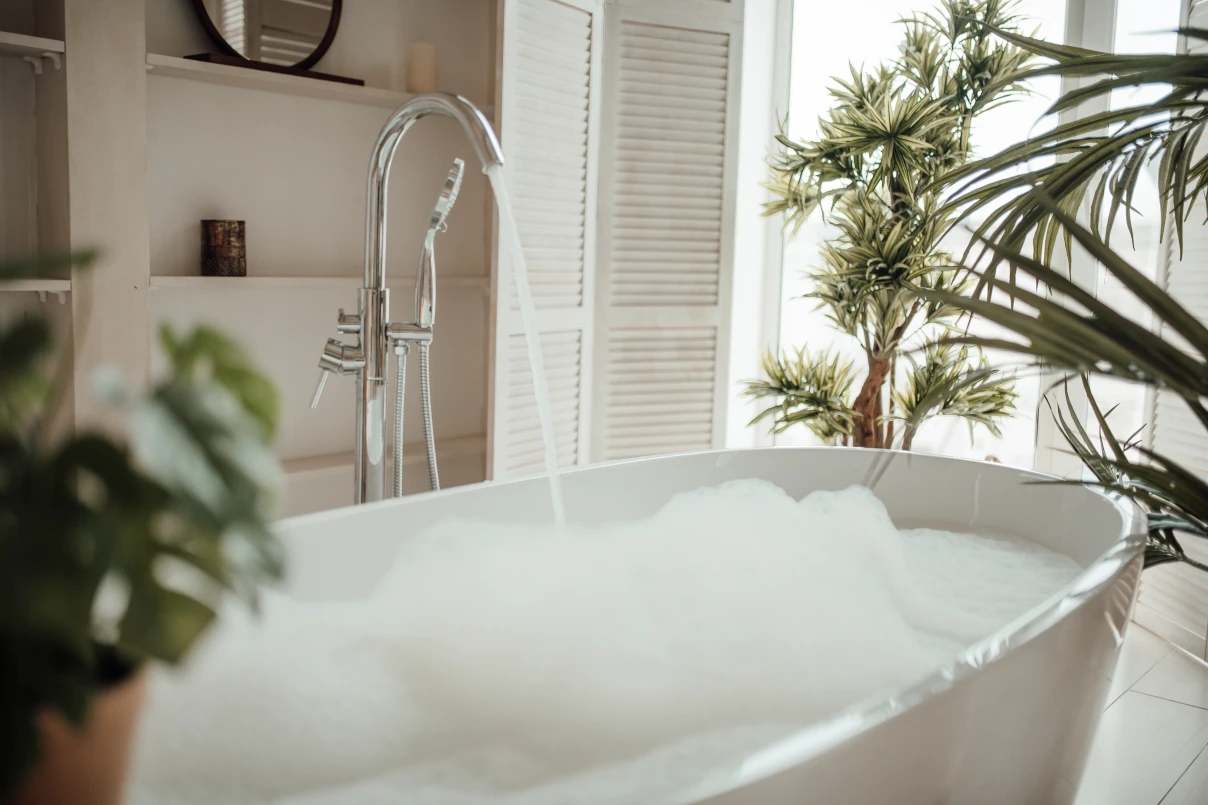
Filling a bath demands hot water to get up to temperature, and there's a high volume of water needed to fill it. Unlike a shower where you can control the flow, a bath requires a set amount of water once you've committed to it.
Smart bathing habits
For young kids particularly, you don't need to fill the bath particularly high (and it'll be safer anyway). Consider whether you need to have a bath every day, or if you can mix it up with showers instead. The bath temperature doesn't necessarily have to be super hot either. A comfortable lukewarm level will do the job without putting too much strain on your hot water cylinder. Even swapping one bath per week for a shower can save roughly $55 to $65 a year.
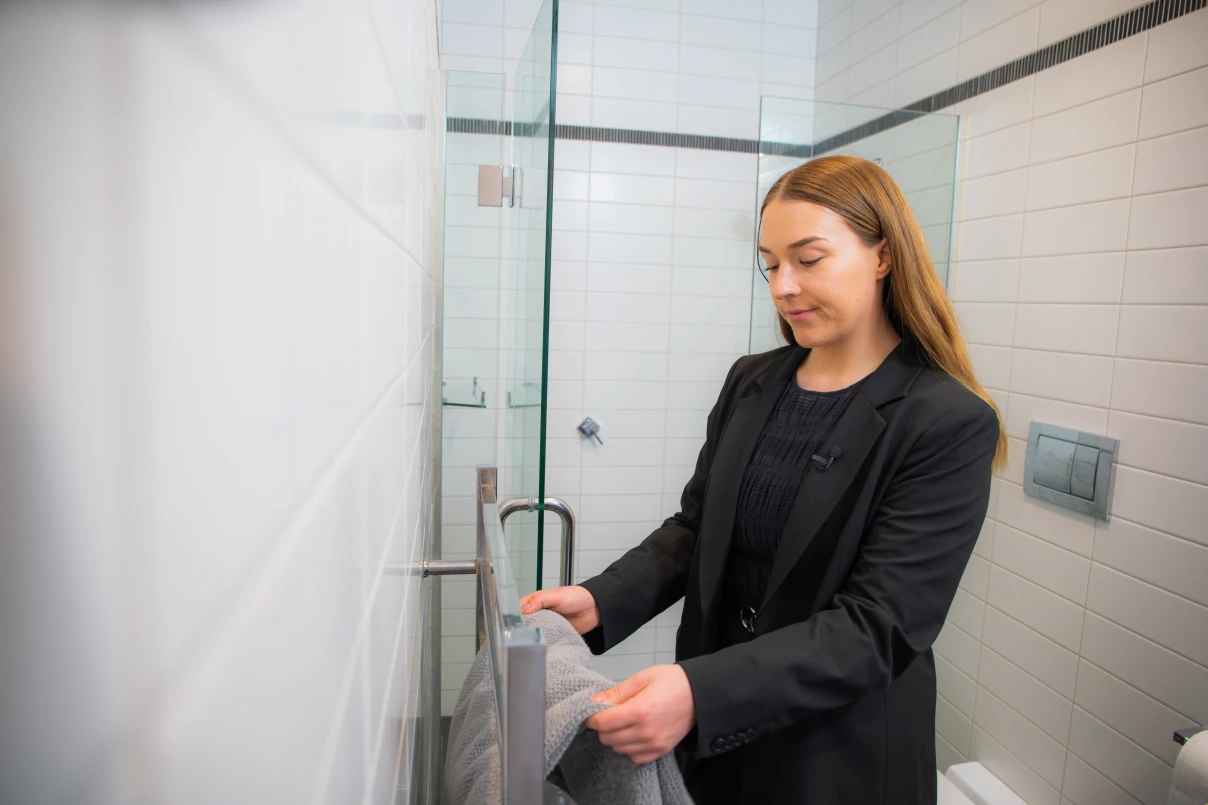
Towel rails - switching off in summer
Great in winter, wasteful in summer
Towel rails are great for keeping your towels nice and dry for the next shower. But in summertime, they're really unnecessary. The warmer atmosphere will be enough to dry your towel between uses. A towel rail, while not the most power-hungry device in your home, is essentially a mini heater. Left on 24/7, the costs start mounting up quickly.
Use timers or switch them off seasonally
Some towel rails have timers that switch on and off at different times of the day to reduce usage. Others you can simply switch off for periods of time or entire seasons. Make sure you're not relying on the towel rail as a constant 24/7 option. They can use around 1.92 kilowatt-hours a day, or 700 kilowatt-hours of energy over a year (that's over $200 annually). Imagine cutting that in half and having an extra $100 to spend on something else. Dropping a standard 80-watt rail from 24 hours to 6 hours per day can save about $157 a year.
Control the bathroom heat in winter
Use heating wisely
Heating a bathroom requires a bit of thought because it's a moist environment. Often windows are open to let steam out, so heating can be difficult and inefficient. Try not to rely on heaters unless absolutely necessary. Like all heaters, bathroom heaters have a high power draw and use more energy than an extractor fan. In most cases, the heat from your shower itself is sufficient.
Optimal settings only
If you do need to run a bathroom heater, make sure it's on an appropriate setting and not at maximum. Definitely avoid using it in summer. A 2-kilowatt fan heater running for 30 minutes uses about 1.0 kilowatt-hour per day, or around $110 a year. Reserve it for really cold mornings and you can halve that cost.
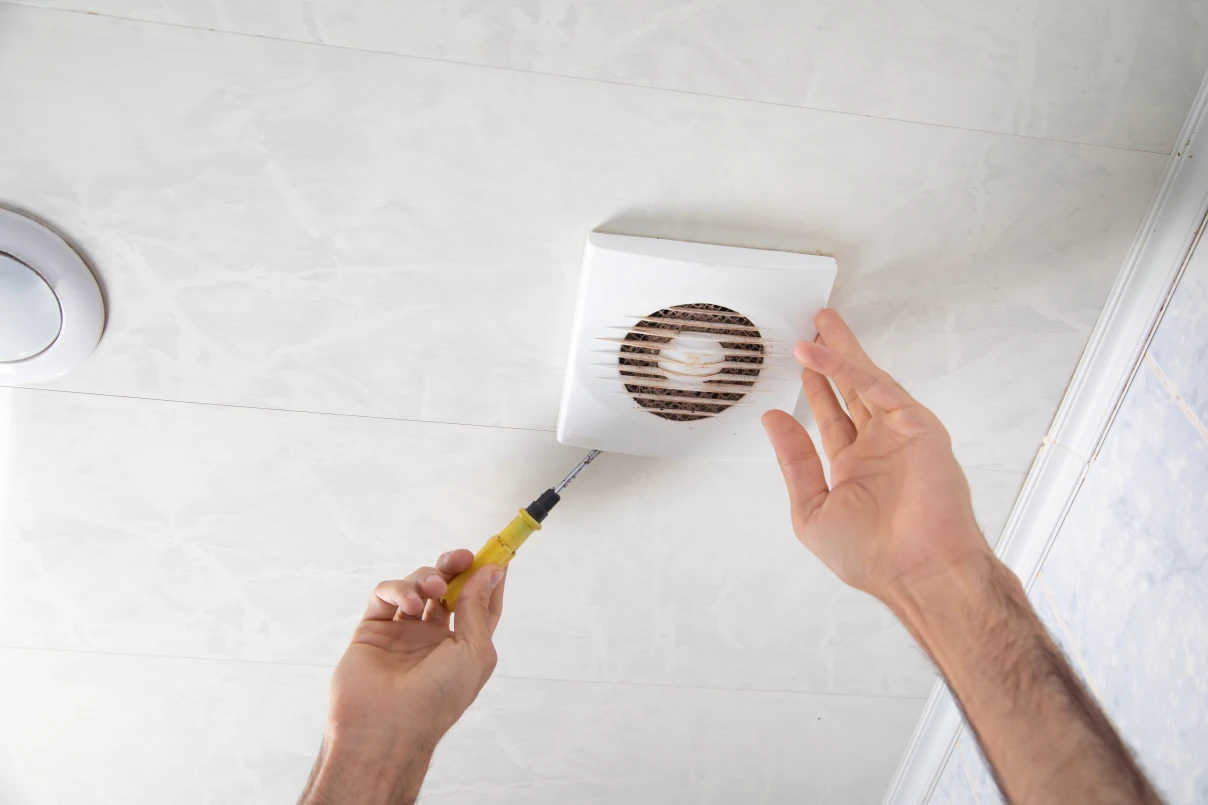
The benefit of efficient extraction
Why extraction matters
Good extraction has real benefits. It stops moisture moving through the home, which makes cooling and heating more expensive and less efficient. When moisture spreads through your home, steam creates opportunities for mould and damp to become issues. Extracting steam from the bathroom directly to outside is really important.
Maintain your extractor
If you've got an old extractor, it may need some maintenance to ensure there are no blockages or inefficiencies in airflow. Check that the fan is operating at full power and the motor is working properly. An extractor that's not functional is pointless. You could think you're extracting steam, but the bathroom just gets progressively damper, which is a health hazard, creates heating problems, and wastes power. The ventilation standard requires all bathrooms to have an extractor fan or certain continuous mechanical ventilation systems that ventilate extracted air to outdoors.
Natural airflow in the bathroom
Fresh air is free and effective
Nothing beats keeping the windows wide open and making sure fresh air comes in and out while steam escapes. This is definitely recommended when weather permits. Natural ventilation costs nothing and can be just as effective as mechanical extraction, especially during warmer months or after a shower when you can afford to let some heat escape. Even simple habits like opening a window while running the extractor fan will improve airflow and help clear moisture faster.
Checking your hot water cylinder is well maintained to help shower efficiency
Regular maintenance is essential
Your hot water cylinder should be maintained regularly. Check that there are no leaks and that settings are adjusted for optimal efficiency. Make sure the timing for when it switches on and off is appropriate for your household's usage patterns. A well-maintained cylinder uses less power and provides more reliable hot water.
Insulation makes a big difference
Your hot water cylinder should ideally be wrapped with an insulation wrap, which is fairly inexpensive but keeps heat from escaping the cylinder. This means it doesn't have to work as hard to maintain temperature. Also consider lagging your pipes (wrapping them with insulation). A lot of hot water efficiency can be lost through pipes, with heat escaping before the water even gets to your tap or shower head. Keeping pipes insulated can improve the efficiency of your entire hot water system.
Bathroom Appliance Usage
These figures are indicative averages, not a bill guarantee. The rate used is the current New Zealand national average residential price (MBIE Quarterly Survey of Domestic Electricity Prices, February 2026); your own rate will depend on your retailer, plan and region. Shower and bath figures use one flow rate of 9 litres per minute throughout for consistency.
Bathroom energy estimates at $0.39 per kWh
Appliance |
Typical power draw (kW) |
Average time per use |
Energy per use (kWh) |
Annual use (365 days) |
Annual energy (kWh) |
Annual cost ($NZD) |
|
Shower hot-water heating 9 L per min for 8 min, 25°C rise |
n-a |
8 min |
2.09 |
365 |
763.96 |
297.94 |
|
Bathtub hot-water heating about 120 L, 25°C rise |
n-a |
per bath |
3.49 |
365 |
1,273.27 |
496.58 |
|
Extractor fan |
0.03 |
0.5 hr |
0.015 |
365 |
5.48 |
2.14 |
|
Heated towel rail left on |
0.08 |
24 hr |
1.92 per day |
365 |
700.80 |
273.31 |
|
Bathroom lighting LED two 10 W bulbs |
0.02 total |
2 hr |
0.04 per day |
365 |
14.60 |
5.69 |
|
Bathroom lighting halogen two 50 W bulbs |
0.10 total |
2 hr |
0.20 per day |
365 |
73.00 |
28.47 |
|
Bathroom fan heater |
2.00 |
0.5 hr |
1.00 |
365 |
365.00 |
142.35 |
Notes on showers and baths
-
Shower and bath rows reflect the implied hot-water energy to heat the water from roughly 15°C mains to 40°C mixed water, which is about 0.029 kWh per litre.
-
Shower example above uses 9 L per min for 8 minutes.
-
Bath example assumes about 120 L of hot water at the mixed temperature.
Total annual bathroom energy and cost
|
Scenario |
What it assumes |
Annual kWh |
Annual cost ($NZD) |
|
Efficient bathroom |
6 min shower daily at 9 L per min, towel rail on a 6-hour timer, LED lighting, extractor 30 min, heater 0.2 hr average |
914.24 |
356.55 |
|
High-use bathroom |
10 min shower daily at 9 L per min, two baths per week, towel rail on 24/7, halogen lighting, extractor 30 min, heater 1 hr daily |
2,827.02 |
1,102.54 |
Helpful benchmarks and quick tweaks
Shorter showers pay off fast
6 min instead of 8 min at 9 L per min cuts shower energy from 2.09 kWh to about 1.57 kWh per shower, saving about 0.52 kWh each day, which is roughly $74 a year.
Timer the towel rail
Dropping a standard 80 W rail from 24 hr to 6 hr per day reduces annual energy from 700.80 kWh to 175.20 kWh, saving about $205 a year.
LEDs over halogens
Two bathroom LEDs used 2 hr per day cost about $5.69 per year versus $28.47 for two halogens. That’s an easy $23 yearly saving in one room.
Limit the heater
A 2 kW fan heater for 30 minutes is about 1.0 kWh per day, or $142 a year. Reserve it for really cold mornings and you can halve that.
Swap a bath for a shower
A typical bath in this model is about 3.49 kWh. The 8-minute shower example is about 2.09 kWh, and a 6-minute shower about 1.57 kWh, so even one fewer bath per week saves roughly $28 to $39 a year, depending on how long your usual shower is.
Showering outside of peak times
Timing can save you money
It's sometimes pretty hard to time showers outside of the busy pre-school or pre-work periods, but if you have a lifestyle that makes it possible to have at least some of your weekly showers during off-peak times, and you're on a plan with off-peak pricing, that could be a great way to reduce your power bill. Off-peak periods only cost less if your plan charges a lower rate at those times, so it's worth checking before you rely on this one. If you're working from home or have flexible schedules and your plan supports it, consider showering mid-morning or early afternoon when power may be cheaper.
Keeping the bathroom dry
Dry is more efficient
A damp bathroom isn't ideal from a maintenance and health perspective (it can create spores and mould), but it's also a much harder environment to keep comfortable. Moist air is more difficult and expensive to heat or cool compared to dry air. By effectively extracting moisture and keeping your bathroom dry, you reduce the need for additional heating or dehumidifying, which saves power.
Prevention is better than cure
Keeping the bathroom dry through good extraction, natural airflow, and closing the door while showering prevents moisture problems before they start. This is far more efficient than trying to deal with a damp bathroom after the fact with heaters or dehumidifiers.
Are you on the power plan that suits your shower habits?
Smart hot water options
If you're looking to get a better plan for your hot water usage, particularly in the bathroom, talk to us at Meridian Energy to see what options we have available. One option is our Smart Hot Water plan, where you can get a $10 credit on your bill every month. Smart Hot Water works by pausing the power supply to your hot water heating for short periods, which helps balance the grid and reduces costs. You can use your hot water smarter while saving money. Terms, conditions and eligibility criteria apply.
Find the right plan
Different households have different hot water needs and usage patterns. Whether you're a household that showers mainly in the mornings, or you have more flexibility with timing, we can help you find a plan that works for your habits. Check out our plans page or get in touch to learn more about smart hot water and other plans that could help reduce your bathroom power costs.
Sources:
“Hot water heating makes up about 30 % of the average Kiwi household’s energy use.” (Energy Efficiency and Conservation Authority (EECA))EECA
“Hot water heating makes up about 30 % of the average New Zealand household’s energy use. However, heat pump water heaters (HPWH) are still an emerging technology…” (EECA)EECA
“You can improve your hot water energy efficiency by adjusting your tap flows, fine-tuning temperature settings, and insulating your hot water cylinder.” (Gen Less (NZ))Gen Less
“Rates of 50 l/s and 25 l/s are also the minimum flow rates required in kitchen and bathroom extract fans in G4/AS1.” (Level (sustainability trust) NZ)Level
“Water heating is an important residential energy use in New Zealand, accounting for about 29 % of total residential energy.” (BRANZ study (via New Zealand context))BRANZ
“The ventilation standard requires all kitchens and bathrooms to have an extractor fan or certain continuous mechanical ventilation systems that ventilate extracted air to outdoors.” (Tenancy Services (NZ) Healthy Homes Standards)Tenancy Services
“You can improve your hot water energy efficiency by … insulating the hot water cylinder … Hot water cylinders can be installed inside or outside the home.” (Gen Less (NZ))