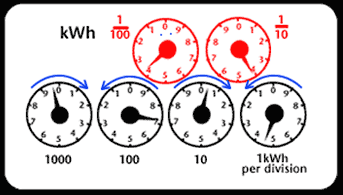
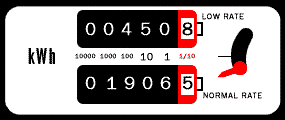
Electricity meters play a vital role in how energy use is measured, billed, and managed across homes, businesses, and public infrastructure. In New Zealand, there are three main types of meter installations, each suited to different needs.
Non-Half Hourly (NHH) metering:
This is the most common type of meter in homes and small businesses. It tracks your total electricity use over time - similar to a car’s odometer.
- Smart Meter: your readings are sent in remotely each day
- Legacy Meter: a meter reader typically visits every 2 months
Unmetered supply:
Some appliances like streetlights or traffic signals don’t have or need an electricity meter. Instead, their electricity use is estimated based on how long they run and how much power they use.
Common use cases: public lighting, signage, CCTV, and traffic systems.
How it works: Usage is calculated from known operating hours and wattage (e.g., a 30 watt streetlight running 10 hours a night).
Commercial & Industrial (C&I) metering:
Also referred to as Time of Use (ToU).
Used by larger businesses and industrial sites, these meters are built to handle high energy loads. Required for any site with capacity exceeding 500A.
Common use cases: Factories, supermarkets, and businesses with complex or high energy usage needs. A contract is required.
How it works: They record usage every 30 minutes and send it to us remotely. Billed in four-hour blocks.