Project river recoverHeader v2

Kahu Ora

Since the 1930s when the Waitaki Power Station was built through to 1985 when the last Ōhau power station was completed to provide renewable energy for generations of New Zealanders, the Waitaki Power Scheme irreversibly altered the aquatic and associated terrestrial habitats, including braided river systems, within the Waitaki Catchment

Since the1930s when the Waitaki Power Station was built through to 1985 when the last Ōhau power station was completed to provide renewable energy for generations of New Zealanders, the Waitaki Power Scheme irreversibly altered the aquatic and associated terrestrial habitats, including braided river systems, within the Waitaki Catchment 

Since 1991, we have worked with the Department of Conservation (DoC) to deliver landscape scale biodiveristy management programme within the catchment focussed on rivers, lakes and wetlands. For the first 35-years, this was called Project River Recovery. Project River Recovery was a highly successful and nationally recognised programme winning a Ministry for the Environment’s Green Ribbon Award and the River Story award at the Cawthron Institute NZ River Awards.  

Kahu Ora now replaces Project River Recovery. Kahu Ora is our next 35-year commitment, continuing New Zealand’s longest running programme of this type.  At its heart it is a partnership with DOC, Waitaki Rūnaka (representing local mana whenua), Meridian Energy and Genesis Energy (the Partners).   

Kahu Ora builds upon the legacy of Project River Recovery, increasing the scale of biodiversity management by over 3 times that of Project River Recovery. The core objective of Kahu Ora is to restore and enhance the ecological integrity and cultural values of braided rivers, lakes, wetlands and taonga species within the Waitaki catchment—an area of immense ecological significance and cultural importance to Ngāi Tahu whānui. Its programme aligns directly with DOC’s strategic goals by embedding biodiversity protection, cultural partnership, and adaptive management at its foundation. 

Kahu Ora is governed by the Partners. It is guided by a 10-year strategic plan, with work being managed through annual plans. 

Why is Kahu Ora important?

The Waitaki River is New Zealand’s largest braided river system in terms of flow. It is likely also New Zealand’s most ecologically complex braided river.  

The Waitaki region is a continuous and connecting cultural landscape from Aoraki to the mouth of the river. Over many generations, whānau and hapū have developed a powerful sense of belonging in the Waitaki landscape. Over the past 200 years, this landscape has changed dramatically but its significance to Mana whenua remains constant and enduring. 

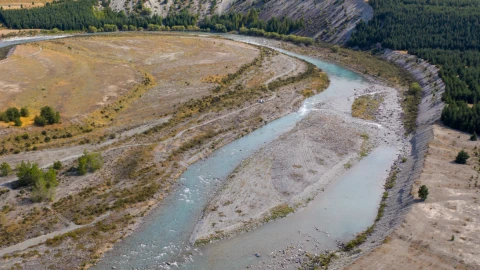
Braided rivers are a globally rare form of river and are only found in similar extents to Aotearoa New Zealand in the Himalayas, and in North and South America. They are characterised by several unique features which separate them from other river types. They have multiple channels of different flows, widths and depths that weave across a gravelly braid plain leaving a series of gravel islands at various stages of succession. This weaving of channels forms a braiding pattern which gives these rivers their name. Braided rivers are highly dynamic physical environments that give rise to complex and specialised ecosystems, habitats and communities. These features form under a unique combination of conditions including variable flows, a continuous but variable supply of gravels, and a moderate gradient.  

A key feature of braided rivers is the constant process of erosion and the deposition of sediments creating and removing both islands and shallow water riffle areas. During elevated flows caused by precipitation or seasonal snow melt, the alluvial transport of gravels increases and fresh gravels from the headwaters enter the river system. As flow begins to drop, alluvial transport lessens, and new islands begin to form between the braids. Thus, the locations of islands and channels regularly move, causing a mosaic of surfaces of various ages and stages of succession. 

Wetlands form in these systems when river channels detach from the main flow, or when groundwater reemerges from the riverbed. Various forms of wetlands can occur in braided river ecosystems, especially along their margins, including swamps, marshes and ephemeral wetlands. Transitional habitats (lake deltas, lake margins and flats exposed during lake level change) are key habitats for a range of species. The connection between the braided rivers and lakes in the upper catchment provides habitat at critical periods for species such as black stilt/kakī, and the seepage areas on lake flats are key habitats for threatened plants (e.g., New Zealand fish-guts plant). 

These values are under significant stress from multiple human induced pressures the most common of which are introduced weeds, predator species, land use changes, agricultural encroachment, recreation impacts, river engineering, and impacts from the combined Waitaki Power Scheme including dewatering of channels, flooding from spillways, and the creation and expansion of lakes and canals. Climate change is an additional driver that changes the levels and types of pressures on the values in the system over time, other potential pressures include novel pathogens such as HPAI (Highly Pathogenic Avian Influenza). Additional pressures occur on the populations that use these habitats that occur outside of the project areas (and the catchment) such as land use change, wilding conifers, wind and solar farms. These additional pressures are out of scope for this action plan. 

Kahu Ora responds to these values and pressures by targeting the management of cultural and biodiversity values to sites where related values can be best protected within the catchment.