If you're looking for a new power provider for your home or business, here's why so many in the Wellington region choose Meridian:
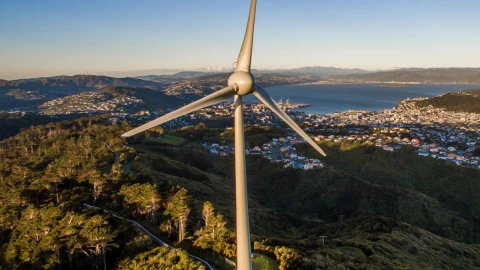
Learn about how Aotearoa's capital gets its energy, and why more and more Wellington residents are choosing Meridian to power their homes and businesses.
Where does Wellington's power come from? What's the story behind the wind farms on the western hills? And is solar worth it in the capital? Welcome to our guide on power in Wellington.
If you're looking for a new power provider for your home or business, here's why so many in the Wellington region choose Meridian:
Power your home or business on your terms with our flexible Freedom Plan or enjoy price certainty with our Fixed Rate Plan. Tailor your energy plan to fit your needs. We offer options for EV owners and a competitive solar buy-back rate.

Our EV plans make home and business charging easy and convenient. To help when you're out and about, join Zero – one of the country's largest EV charging networks powered by Meridian, with more than 300 charge points.

We’re dedicated to making a positive impact in our communities. From the Kākāpō Recovery Programme to supporting KidsCan and communities that are striving to do good things with our Community Decarbonisation Fund, we invest in initiatives that matter.

Mill Creek wind farm, located northwest of Wellington near Ōhāriu Valley, has been fully operational since 2014. Its 26 turbines generate up to 59.8 megawatts of electricity, enough for about 34,000 average New Zealand homes.
Together, West Wind and Mill Creek represent a substantial share of Wellington's renewable generation, and both continue to support the national grid year-round.
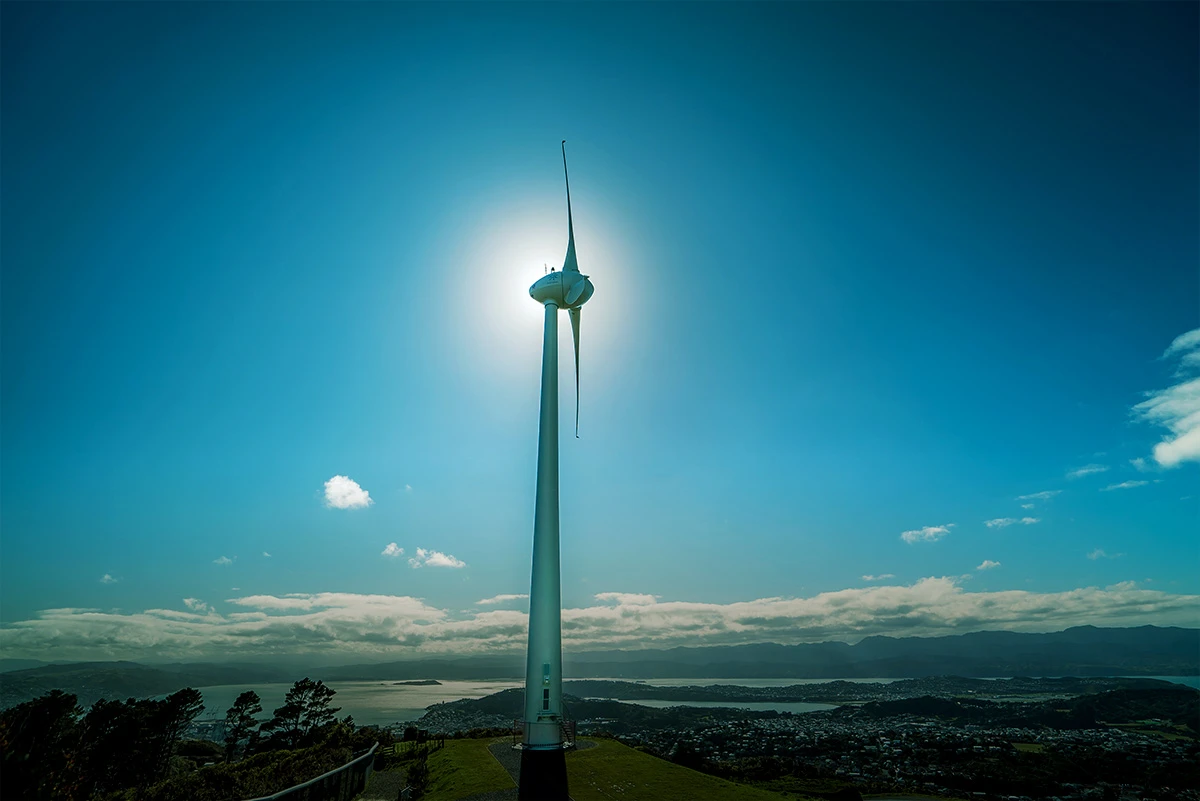
The iconic Brooklyn wind turbine overlooking the capital.
Mill Creek wind farm, located northwest of Wellington near Ōhāriu Valley, has been fully operational since 2014. Its 26 turbines generate up to 59.8 megawatts of electricity, enough for about 34,000 average New Zealand homes.
Together, West Wind and Mill Creek represent a substantial share of Wellington's renewable generation, and both continue to support the national grid year-round.
Wellington's reputation for wind is well earned. It is one of the windiest cities in the world, and that windiness is exactly what makes it such strong territory for renewable generation.
Daytime temperatures sit around 20 to 21 degrees Celsius in summer and 12 to 13 degrees Celsius in winter. Summers can bring genuinely warm, dry spells, though the wind means a warm day can turn brisk quickly. Winters are mild by New Zealand standards, but when a southerly comes through, it feels colder than the thermometer suggests.
Wellington receives around 2,000 sunshine hours per year, which is a solid figure and more than enough to make solar a practical option across much of the region.
Energy demand follows a familiar pattern: it peaks in winter as people reach for the heat pump, and rises again on hotter summer days. Good insulation makes a real difference to how much energy a Wellington home needs to stay comfortable through both seasons.

It's not always gale-force winds in Wellington.
Wellington may not immediately come to mind as a solar hotspot, but with around 2,000 sunshine hours per year it has more than enough sun to make solar panels worth considering for homes and businesses across the region.

Solar panels generate power from daylight, not just direct sun. Even on overcast days, generation continues. Wellington's wind also helps here as it pushes cloud cover through quickly, and can clear panels of debris that builds up on rooftops over time.

Charging your electric vehicle at home using solar power is one of the most cost-effective ways to run an EV in New Zealand. If you have both, it is worth talking to us about how your plans can work together.
Wellington is one of the most EV-friendly cities in the country. Wellington currently leads the nation in EV adoption, with EV ownership running at more than double the national average.
The city's compact geography suits EV ownership well. Most daily trips, school runs, commutes and weekend errands sit comfortably within the range of any modern electric vehicle. The hills can feel like a concern, but in practice they work in your favour. Driving down from Karori, Northland or Wadestown puts energy back into the battery through regenerative braking rather than wasting it as heat.
For longer trips out of the city, the national fast-charging network means journeys north to the Kāpiti Coast, Palmerston North, or further afield are well supported with a bit of planning. Zero charge points are available in and around Wellington city for top-ups along the way.
Home charging at off-peak rates can work out to around the equivalent of 30 cents per litre, a significant saving on running costs over time.

For many Wellingtonians, EVs just make sense.
Wellington is a growing city, and new residential development across areas like Johnsonville, Churton Park and the Kāpiti Coast means more new builds need to get their power sorted. Here is how the connection process works.
Talk to your building company and electrician early. They will coordinate with Wellington Electricity, the local lines company, to get consents in place and plan the network connection for your property.
Get in touch with us. As a Meridian customer, we can help ensure your meter is set up correctly, your connection date is accurate, and your plan is ready to go when you move in.
Wellington Electricity and a licensed contractor will complete the physical installation, including any cabling, meter installation, and connection to the network.
If you are experiencing a power outage in Wellington, your first step is to check with Wellington Electricity, the local lines company. They will have up-to-date information on planned maintenance or any known faults in your area.
If there is no known fault and your neighbours have power but you do not, give us a call. It may be that a qualified electrician needs to check your mains setup.
From small businesses in the CBD to larger operations across the wider region, Meridian powers a wide range of Wellington businesses. We have tailored plans and a dedicated team to support you.
Thinking about EV charging for your team, fleet or customers? We can manage the whole process, from site assessment through to installation and ongoing support.
Adding solar to your business can reduce your power costs, lower your emissions footprint and provide resilience during outages. Talk to us about what's possible for your site.
Learn more about how we power important initiatives in Wellington.
Recent Power Up funding has backed the Mākaracarpas community group, supporting the fencing of over 3,000 metres of waterways and the planting of over 24,000 native plants in the Mākara and Ōhāriu valleys. The project also supports the Capital Kiwi Project, which has successfully established kiwi in the hills around the West Wind farm.

Got questions? Our team is here to help. Let’s talk about a quote or a power plan that’s tailored just for you.