New Zealand’s evolving solar energy industry

Sometimes the solution to a whole lot of problems has been right in front of you all the time – or above your head. Energy use from the sun has come a long way since humans first harnessed the rays of sunlight with glass to make fire around the 7th Century B.C. The solar power industry in New Zealand continues to grow from strength to strength where, as a small and forward-thinking nation, we are quick to embrace innovative ways of making our lives better. 

The early days of solar energy in New Zealand 

Back in the 1980s and early 1990s solar power in this country was still considered a headline-grabbing oddity. Kiwis were riveted by the ingenuity of Hamilton engineer Stewart Lister as he built and drove his solar-powered vehicle Solar Kiwi from Cape Reinga to Bluff. Although solar-powered cars may not have caught on, the utilisation of solar-generated electricity has. Although, it could even be said that any homeowner with solar power who recharges their EV at home is, by proxy, driving a solar-powered car! 

Solar at scale began around 2007 with some New Zealand schools installing photovoltaic panels on top of their campus buildings, largely as a renewable energy educational experience. In a short time, solar power as a contributor to a school’s power requirements has become evident.  

Infrastructure and investments in solar  

Many more individual companies and large-scale commercial precincts have made use of their expansive roof capacity by embracing solar as a valued contributor to their power requirements. 

Industries such as wineries, factories, and logistics distribution centres - in fact any facility with the structural dimensions to install solar - are getting on board and reaping the benefits.   

New Zealand is seeing growth of fully operational utility scale solar farms. These can be found in places like the Bay of Plenty and another recently completed and opened in Northland. More farms are planned and in various stages of consent and construction in sunny parts of both the North and South Islands. We’ve come a long way with solar power and installations are increasingly appearing across New Zealand’s landscape. 

Our solar development at Ruakākā Energy Park is one of New Zealand’s most significant solar developments, pairing a 130 megawatt solar farm alongside the country’s largest battery storage system. Once complete, the solar array will produce around 230GWh of clean electricity each year from roughly 250,000 panels, enough to power more than half of Northland’s homes. Together with the 100 megawatt battery system already operating, the project shows how large-scale solar and storage can strengthen regional supply, cut reliance on fossil fuels and support New Zealand’s move toward a resilient, renewable energy future.

Swannanoa Solar Farm is a proposed 200 megawatt development just northwest of Christchurch. The site’s size and access to existing transmission lines make it an ideal location for large-scale solar generation. Meridian is currently working through early design and environmental assessments, with a focus on sustainable construction and low impact development. If approved, the project would become one of the South Island’s largest solar arrays and a major step in growing New Zealand’s renewable electricity supply.
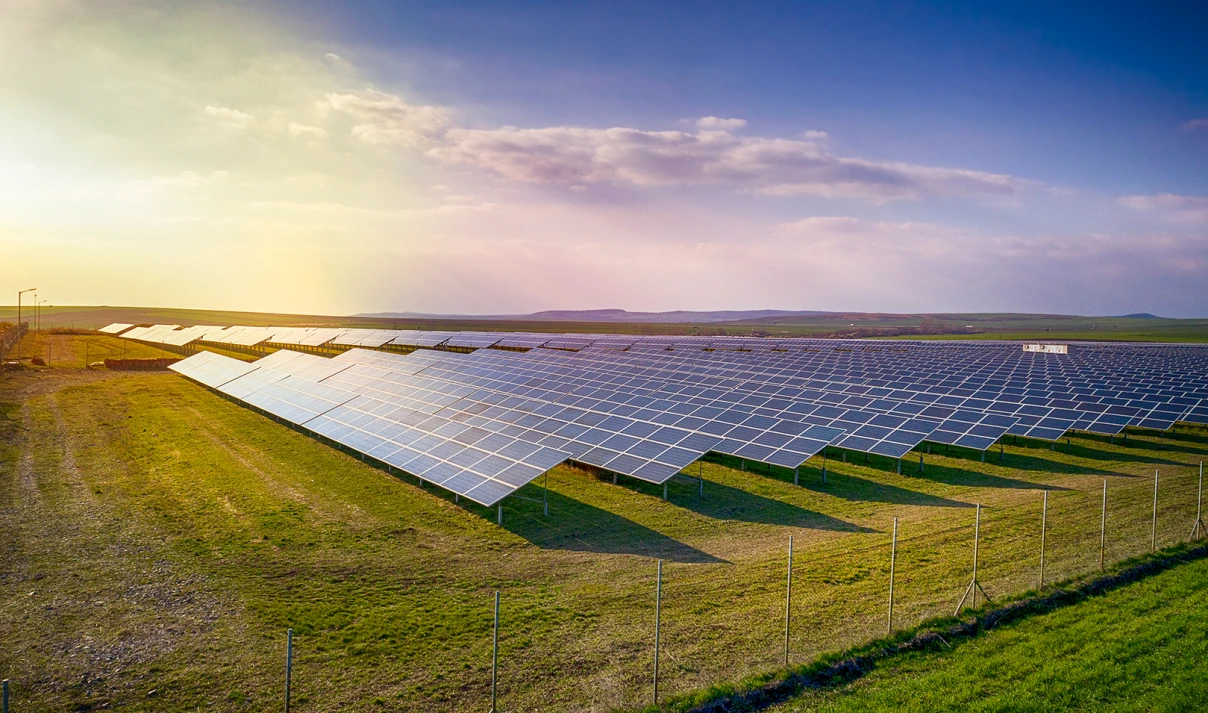
 

Scores of solar panels installed in farmland.

100% renewable energy goals 

New Zealand punches well above its weight compared with other OECD countries. Currently around 85% of our energy is generated from renewable sources, with  a government target to be a net-zero carbon economy without any reliance on long-lived gases by 2050. 

Although we’re well ahead of the game, having had hydroelectric and geothermal power for decades, there’s still a way to go to reach our goals. The growing solar power industry is making a significant contribution to this energy strategy objective.

Solar will play a key part in New Zealand’s renewable future because it is one of the fastest and most cost-effective forms of new generation to build. Large scale solar farms can be planned and constructed in a much shorter timeframe than wind or hydro, with lower upfront costs and fewer complex consenting requirements. They can also be located close to demand centres, reducing transmission pressures and improving regional resilience. As New Zealand’s electricity use grows, solar offers a practical way to bring new clean supply online quickly while keeping overall system costs down.

Solar installation across New Zealand business

As business owners seek to reduce their overheads and ensure they’re not just profitable, but contributing responsibly, solar is increasingly becoming the preference. Mitigating the carbon footprint, controlling costs, and the positive  of sustainability creates an ideal context for embracing commercial solar solutions.   

Businesses with a strong daytime energy load are particularly well-suited to solar because their peak demand aligns with the periods when solar generation is at its highest. This natural match means a larger share of the electricity produced can be used on site in real time, reducing reliance on grid supply and lowering exposure to wholesale price fluctuations. For many operations such as manufacturing, processing, retail and commercial offices, this alignment can translate into meaningful savings and greater energy certainty. It also makes the economics of solar more compelling, as the business captures more of the value directly rather than exporting excess generation back to the grid at lower rates.=

Power companies have a range of products and services designed to assist business in getting onboard with solar power. Commercial solar solutions include business solar buy back plans – both variable and fixed pricing where your power supplier will purchase your exported electricity and credit it to your power bill.

Meridian’s solar power purchase agreement gives businesses a way to adopt commercial scale solar without any upfront capital. For systems from 150kWp and above, Meridian funds, designs, installs and maintains the entire array, while the business buys the solar electricity at an agreed rate for the length of the contract. This offers predictable energy costs and immediate access to renewable generation, with ownership of the system transferring to the business at the end of the term. It’s a simple path to solar that removes financial and operational barriers while supporting long term sustainability goals.

As businesses embrace solar, they are also increasingly contributing to solar power generation. With installed roof panels acting as behind-the-meter distribution excess power is returned to the grid.

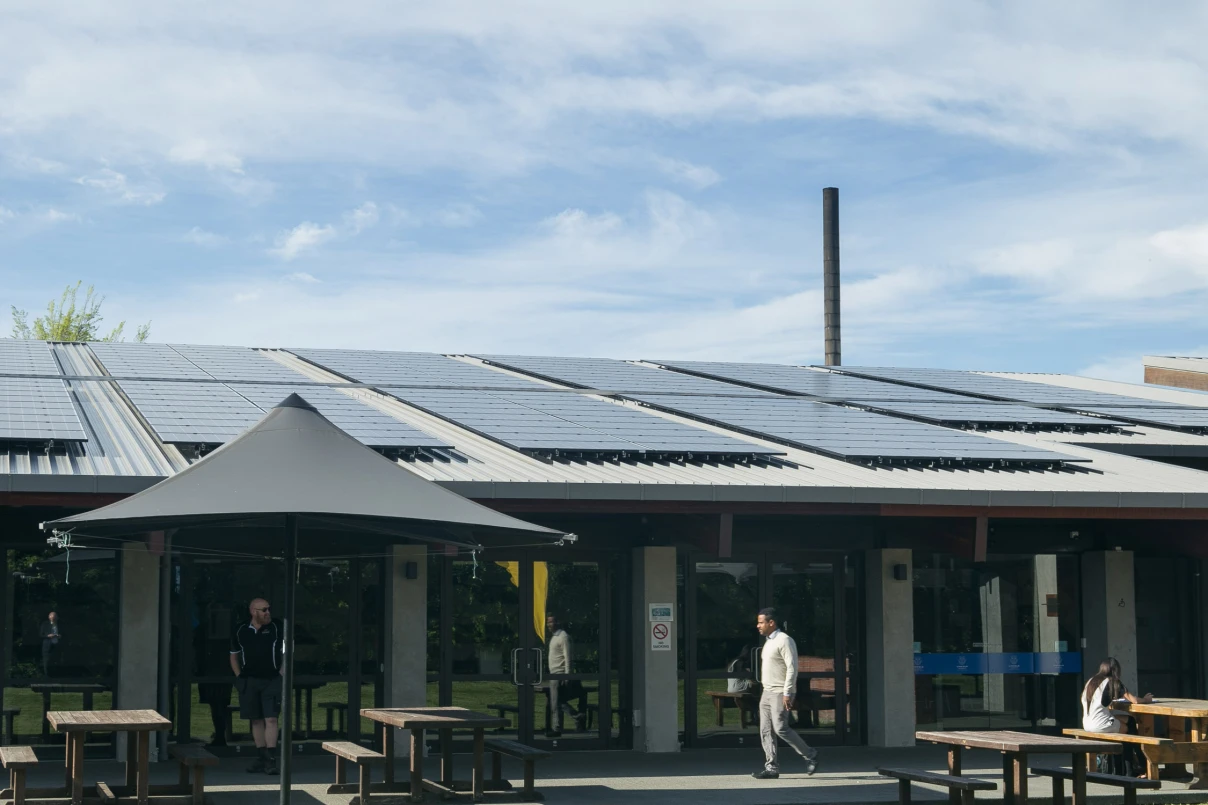
Cafe that is closed with solar panels installed on roof, people and seating arranged outside on path

Remote and rural applications 

For property and business owners living out of the city or on farms, solar power is a valid off-grid or grid-connected solution. As solar power installations spread out to the back blocks of New Zealand’s remote land areas, the savings to landowners can be substantial. 

Solar power is being used for many things in a rural setting. These include to light and heat buildings, drive mechanised operations, electrify fences, irrigation pumps and to provide power to essential buildings such as milking and shearing sheds.

An autonomous solar power system in a remote or rural area can potentially:

  • save you money in running costs;

  • earn you money from feed-in tariffs;

  • provide more long-term price certainty; and

  • boost self-sufficiency and security.

Solar power synchronises well with a farm’s seasonal calendar too. While the sun shines longer in warmer summer months, some farm demands like irrigation can also be at their highest. In winter when the days are shorter and colder and less power is produced, demands on stock activity and irrigation rates for example, are reduced as well.

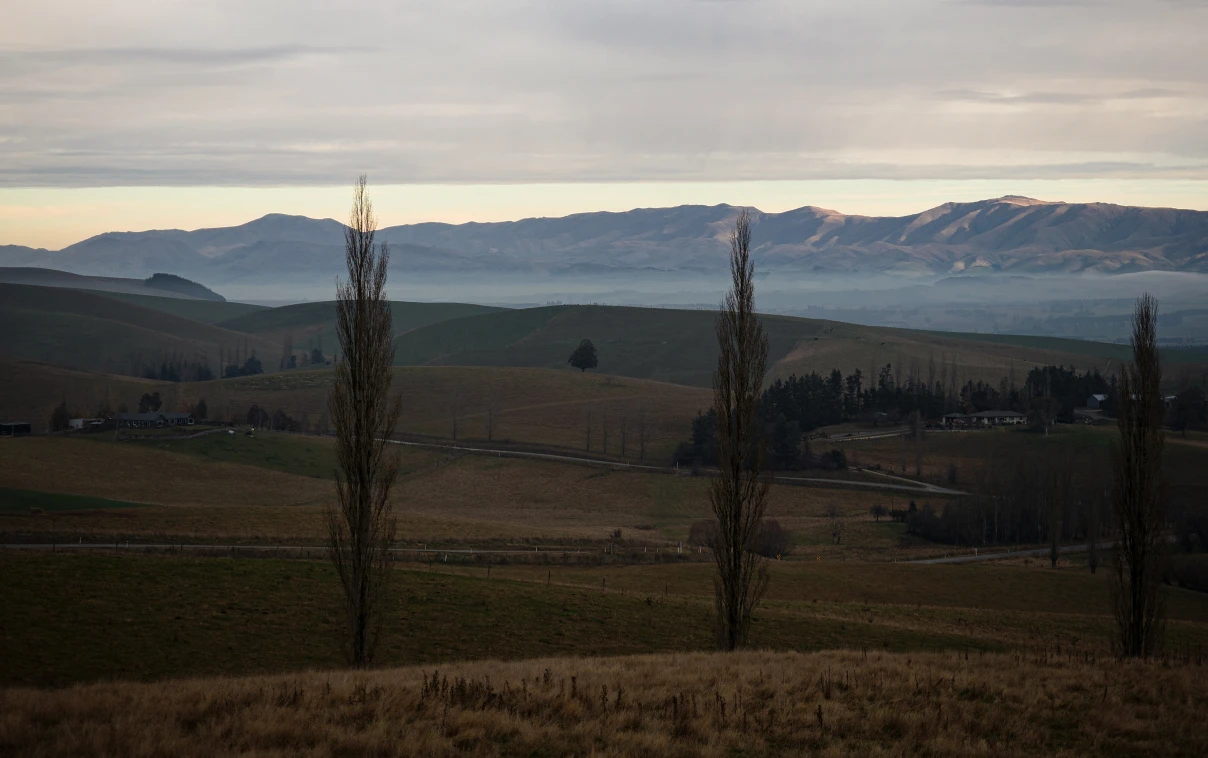
Panorama view of mountain range with low hanging clouds.

Solar on our homes

Anyone with a window seat on a plane coming into land over a New Zealand city today will have a bird’s eye view of the solar panels on residential roofs below. Although nowhere near the same degree as our sunny Australian neighbours, we can certainly claim that solar powered homes are on an upward trajectory. 

Formerly an uncommon sight, Photovoltaic (PV) panels are now popping up on homes and a seriously considered option in new builds - some councils are even requiring a % of homes in new subdivisions to be equipped with solar. This is particularly common in those sunnier regions like Northland, the Bay of Plenty and Marlborough.  As solar-powered homes grow in popularity, installation costs get lower and more competitive buy back power plans are introduced, many Kiwis now have a viable grid-complementary source of energy. 

Better, cheaper panels and converters

Research and development to produce better photovoltaic panels, converters and batteries can lead to reduced costs by way of economies of scale.

Solar panels have an interesting history and once upon a (recent) time, the customer’s choices were limited. As the technology has advanced, the efficiency rating and design aesthetics of panels and convertors has taken a big leap forward. The future direction sees an integration of the panels into the roofing material itself – an exciting next step in the evolution of solar power systems.

Meridian’s innovations and collaborations in solar

We are part of the Powering Change collective along with other key players as part of a cooperative commitment to reducing emissions and increasing sustainability in the energy sector. The aim is to collaborate on the key energy factors that impact our climate with the ultimate goal towards a better Aotearoa New Zealand for future generations. 

We pride ourselves on doing our best for the planet. Our proud reputation for innovation and resourcefulness includes the solar power segment with competitive buy-back and the Solar Power Purchase Agreement for commercial customers. 


Our Certified Renewable Energy product gives businesses a simple and credible way to match their electricity use with verified renewable generation from Meridian’s hydro stations and wind farms. Certified meets the market-based reporting requirements of the GHG Protocol, allowing organisations to report their market based Scope 2 emissions as zero while directly supporting new electrification projects through the Decarbonisation Fund. With every kilowatt hour matched and independently verified, businesses get a transparent, trusted pathway to strengthen their sustainability reporting and contribute to real carbon reduction in communities across Aotearoa.