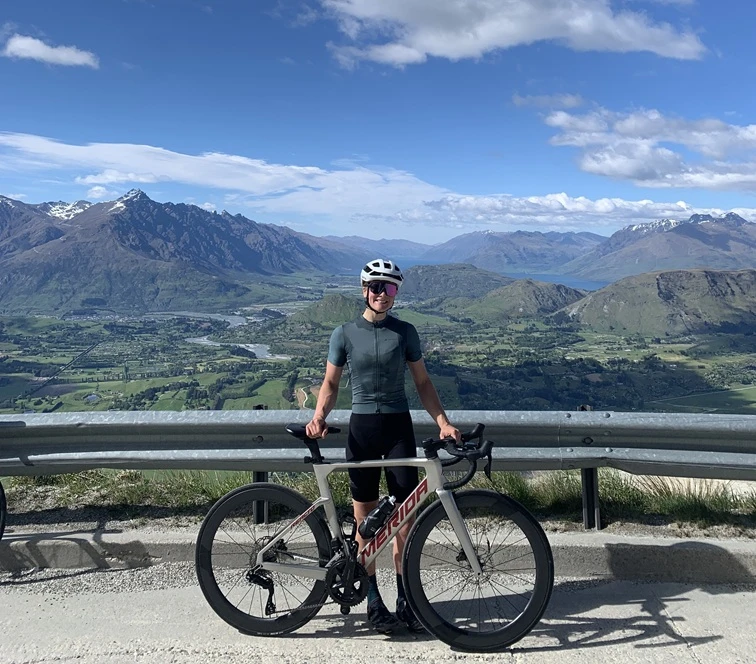
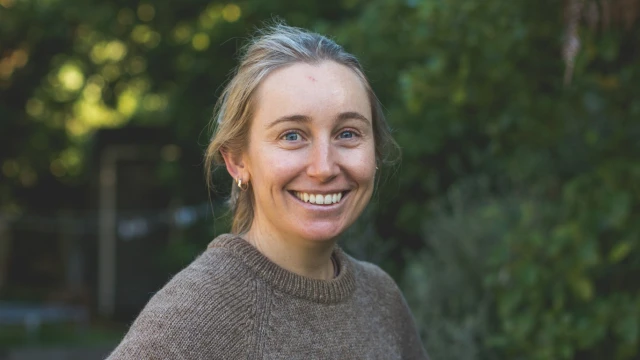
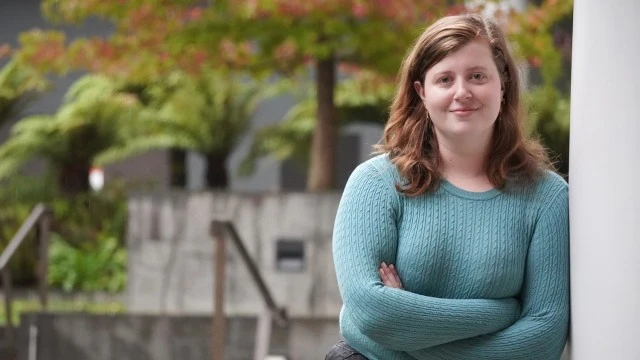
Whenever she’s been at a bit of a loss as to what to do with her life, Emily Sopers has turned to a familiar, trusty friend – her bicycle.
The first time Emily got on her bike and set off to clear her head, she had just unceremoniously quit her first job after graduating from Waikato University with a first-class honours degree in process engineering.
The main thing she – perhaps understandably – learned from her time as a graduate engineer in Beca’s wastewater team was that she wasn’t particularly passionate about wastewater.
“I thought, what am I doing with my life? This is just not for me,” recalls Emily of her decision to quit just 10 months after taking what for many would have been a plum first role with a major company.
Emily packed her bag, grabbed her bike and took off to tour the North Island’s mountain biking hot spots, eventually settling in Gisborne where she picked up a job as a cellar hand at a winery.
“That trip was one of those core memories for me. I loved being out on my bike in the forest. And working on the winery reinvigorated my passion for process engineering, as it was fun to be part of a team producing a product.”
Emily’s 2020 Kiwi tiki-tour turned out to be a practice run for an even more adventurous endeavour in 2024 – a nine-month, 15,000km cycle trek through Europe, Turkey, Morocco and South-east Asia with partner Hugo Jones, a former member of New Zealand’s elite track cycling squad.
“It was epic – such a cool way to see the world,” says Emily, who has labelled that time in her LinkedIn bio as “full-time traveller”.
“Every country was so different, but the people were in many ways the same. There was a connecting human thread.”
While she never felt in danger on the epic journey, Morocco in particular was “pretty crazy”.
“It was an incredible country, and most people were so welcoming. Locals and policemen would keep an eye on us though and take us in at night when we tried to wild camp because they'd say it's too dangerous outside. We were so amused by this because we never really felt unsafe.”
That second stint on her bike came after Emily had found her feet as a process engineer during a three-year stint with consultancy DETA.
“Process engineers work with clients to understand the product that they want to make, and the raw materials that they start with, and then design the process that is going to efficiently turn those raw materials into a final product,” says Emily.
“With DETA I worked in meatworks, dairy factories, wineries, all sorts of different companies. We worked with these businesses to reduce their carbon footprint, make their processes more energy efficient, and electrify their gas or coal boiler systems.
“It was a great job, and I fell in love with the energy sector while I was at DETA, but I never really felt like a proper engineer. I knew I wanted to do something more people and relationships focused rather than super technical.”